 listicle
Affordable HYROX Training: 7 Alternatives to Expensive Programs
Table of Contents
- Why HYROX Training Costs Vary So Much
- Free HYROX Training Plans That Work
- App-Based HYROX Training Under $20 Per Month
- HYROX Training at a Regular Gym Without a Coach
- DIY HYROX Workout Routines You Can Build Yourself
- HYROX Race Simulation Workouts at Home or in Your Gym
- When to Invest in Paid Coaching Instead of DIY Training
- Conclusion
- Frequently Asked Questions
Last Updated: October 14, 2026
Why HYROX Training Costs Vary So Much
The price tag on HYROX training programs can range dramatically. Yet some athletes train for HYROX using nothing but free plans and their existing gym membership.
The variation comes down to what you're actually paying for. One-on-one coaching means personalized attention, real-time form correction, and a coach who adjusts your plan based on how your body responds. Group classes add community accountability and structured progression. Premium apps offer race-specific programming and detailed analytics.
At Warrior Welke CrossFit l/Hyrox, we see this spectrum firsthand. Some athletes arrive ready to commit to comprehensive coaching because they want expert guidance and community support. Others prefer to start with self-guided training and upgrade later.
The key insight: you don't need to spend heavily to prepare for HYROX. You need the right structure for your situation. This guide breaks down alternatives to expensive HYROX training programs, including affordable HYROX training options, so you can choose what actually fits your goals and resources.
Free HYROX Training Plans That Work
Free training plans exist, and many athletes have successfully raced HYROX using them. The HYROX Vault Training Plans collection presents multiple free options.
The advantage of free plans is obvious: zero cost and immediate access. The tradeoff is equally clear. Free plans are static. They don't adjust based on your actual fitness level, past injuries, or how you're responding week to week. If you miss a session, there's no coach to rebalance your week.
Free plans work best for athletes who already have solid fitness fundamentals. If you've done CrossFit for a year or two, run regularly, and know how to move under load, a free plan gives you the race-specific structure you're missing.
A practical starting point: download a free plan and run it for 2-3 weeks. If you stay consistent and understand the movements, you can likely finish the full program. If you're confused about form, skipping sessions, or feeling lost, that's a signal to add coaching or use an app with video demonstration and progression logic.
App-Based HYROX Training Under $20 Per Month
Apps bridge the gap between free plans and expensive coaching. They cost less than a single coaching session but provide more structure than a static spreadsheet.
Repz: Station-Specific Programming
Repz programs all eight HYROX stations with clear movement progressions.
The value proposition is straightforward: station-by-station programming without hiring a coach. You get workouts designed specifically for the eight movements you'll face on race day: sled push, sled pull, wall balls, rowing, burpee broad jumps, sandbag lunges, rope climbs, and SkiErg intervals.
What Repz doesn't include is personalization. The app doesn't know your current fitness level, injury history, or how much volume you can handle. It also doesn't offer video coaching or form feedback. You're following a predetermined progression, which works well if that progression matches your actual readiness.
FORMD: Free Workouts with Optional Premium
FORMD offers a free tier with standalone workouts plus a paid Pro plan. The free tier lets you try individual workouts before committing to a subscription.
This model works well for athletes testing the waters. You can sample FORMD's workout style and see if it resonates before paying. The Pro plan includes full training programs with progression, which is where the value becomes apparent.
Runna: Running-Focused Training
Runna focuses on running-specific conditioning. If your HYROX weakness is the 8-kilometer run component, Runna fills that gap with structured running plans.
Many HYROX athletes use Runna alongside another app or gym training. You get your strength and station work elsewhere, then layer in running-specific conditioning through Runna. This hybrid approach costs less than hiring a full-service coach but provides targeted work on your weakest link.
HYROX Training at a Regular Gym Without a Coach
You don't need a specialized HYROX program to build the fitness HYROX demands. A regular gym membership covers most of what you need.
The eight HYROX stations test strength, power, and aerobic capacity. A solid gym training plan addresses all three. Strength work on barbells and dumbbells builds power. Rowing machines and assault bikes develop aerobic capacity.
The challenge is designing your own plan. You need to understand how to balance volume across different movement patterns, when to push hard versus build capacity, and how to progress week to week.
A practical approach: follow one of the free HYROX plans as part of affordable HYROX training, but substitute movements based on what your gym has available.
The substitutions don't need to be perfect. They need to train the same quality: power, pulling strength, or aerobic work. This requires understanding why each movement is in the plan, not just what the movement is.
| Training Approach | Cost | Best For | Personalization |
|---|---|---|---|
| Free plans | $0 | Experienced athletes with solid fundamentals | None |
| App-based (Repz, FORMD) | $6-$20/month | Self-directed athletes wanting structure | Minimal |
| Regular gym + DIY plan | Gym membership | Athletes with programming knowledge | Moderate (you build it) |
| Local gym with HYROX coaching | Varies | Athletes wanting expert guidance and community | High |
DIY HYROX Workout Routines You Can Build Yourself
Building your own HYROX training plan is possible if you understand the demands of the race and how to structure training over time.
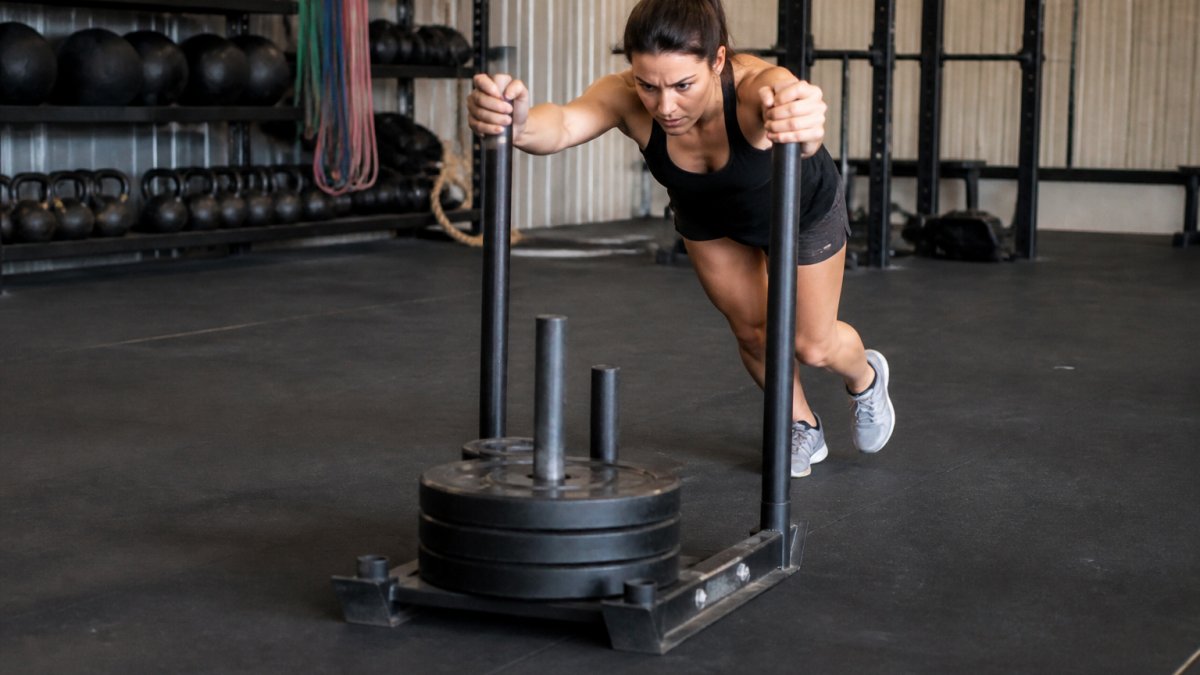
A HYROX race includes eight stations spread across an 8-kilometer run (The Fitness Race). The stations demand explosive power (wall balls, broad jumps), pulling strength (rope climbs, sled pull), pushing power (sled push, burpee broad jumps), and aerobic capacity (the run between stations) (The Fitness Race).
The progression follows a simple pattern. Early weeks build work capacity at moderate intensity. Middle weeks increase load and intensity. Final weeks taper volume while maintaining intensity, allowing your body to recover before race day.
Common mistakes in DIY planning: treating every session the same intensity (you burn out), neglecting the run component (you hit the wall at kilometer 6), and not testing your plan before race day (you discover weaknesses too late to fix them).
A practical safeguard: run your DIY plan for 6-8 weeks before committing to the full 12-week cycle. This gives you time to identify what's working and what needs adjustment without wasting an entire training block on a flawed plan.
HYROX Race Simulation Workouts at Home or in Your Gym
Race simulation training is the most valuable work you can do in the final 3-4 weeks before HYROX. It's also the easiest to do on your own.
A race simulation is straightforward: perform all eight stations in sequence, run between them, and time yourself (The Fitness Race). You don't need special equipment. You need space, some basic tools (dumbbells, a bench, a pull-up bar), and 45 minutes.
Here's a sample simulation you can build at home or in any gym:
- 500-meter run
- 50 wall balls (14-pound ball)
- 500-meter run
- 50 sled push movements (heavy carry or loaded push if no sled)
- 500-meter run
- 10 rope climbs or 20 assisted pull-ups
- 500-meter run
- 50 burpee broad jumps
- 500-meter run
- 50 sandbag lunges
- 500-meter run
- 30 rowing intervals (20 seconds hard, 10 seconds easy)
- 500-meter run
- SkiErg simulation (3 minutes hard)
- 1-kilometer run to finish
This takes roughly 45-50 minutes at race pace. You're not trying to set a personal record. You're practicing pacing, testing your nutrition strategy, and confirming that your fitness is where it needs to be.
Do this simulation every 2-3 weeks in your final month. Track your times and how you feel. If you're slowing significantly in the final stations, your aerobic base needs work. If specific stations feel weak, prioritize those in your remaining training weeks.
When to Invest in Paid Coaching Instead of DIY Training
Paid coaching makes sense in specific situations. It's not always necessary, but it's worth the investment if any of these apply to you.
You're returning from injury. A coach assesses your movement patterns and modifies training to protect your recovering areas while building fitness elsewhere.
You've never done functional fitness. If CrossFit or HYROX is new, a coach teaches you how to move safely and efficiently. Bad movement patterns learned early are hard to unlearn.
You're training for a specific time goal under 60 minutes. If you're chasing a competitive time, your training plan needs to be precise. Small adjustments, intensity levels, volume ratios, taper timing, matter.
You lack consistency on your own. If you struggle to stick with training without external accountability, a coach or group class environment provides the structure you need. This is legitimate.
You're balancing HYROX training with running or other sports. Programming multiple sports simultaneously requires understanding how they interact. Too much running volume interferes with strength development.
For athletes in the Raymond area seeking this level of personalized guidance, Warrior Welke CrossFit l/Hyrox provides comprehensive HYROX training with expert coaching, community accountability, and holistic support including nutrition and recovery services. Try a Free Intro Session to experience the coaching style and community before committing.
Conclusion
Expensive HYROX training programs aren't required. Free plans work for experienced athletes. Apps under $20 per month provide structure without coaching. Regular gyms cover the physical demands of the race. DIY training works if you understand progression and pacing.
The real cost isn't money, it's consistency and smart programming. Athletes who follow a mediocre plan consistently beat those who skip a perfect plan. The best program for you is the one you'll actually do.
Start with free resources. Test a low-cost app. Build your own plan if you have programming knowledge. Upgrade to coaching if you're returning from injury, new to functional fitness, or chasing a competitive time goal.
The decision ultimately comes down to your experience, your budget, and how much external structure you need to stay accountable. Warrior Welke CrossFit l/Hyrox offers personalized fitness plans, expert coaching, and community accountability for athletes who want comprehensive support.
Frequently Asked Questions
Can you train for HYROX without a paid training program?
Yes. Free HYROX training plans from HYROX Vault cover multiple race goals and weekly schedules. Apps like FORMD offer free standalone workouts. CrossFit training, running apps, and strength conditioning at a regular gym all build the endurance and functional fitness HYROX demands. The trade-off is that self-guided training requires you to understand HYROX station movements and program your own race simulation, something a coach handles automatically.
What is the cheapest way to train for HYROX?
Free HYROX training plans are the lowest cost. FORMD's free tier and HYROX Vault's free plans require no payment. If you want app-guided structure, Repz offers a paid option. Combining a free plan with a regular gym membership or CrossFit box membership keeps total cost minimal. Many athletes pair a running app like Runna with strength work at a gym to cover both endurance and power output for race-specific conditioning.
Can you prepare for HYROX with a running plan and strength workouts?
Absolutely. HYROX success depends on running endurance, functional strength, and movement efficiency across eight stations. A dedicated running plan builds aerobic capacity and leg endurance. Strength training, lunges, sled work, kettlebell exercises, and sandbag carries, develops power output and conditioning. Combining these two training methods addresses the core demands of a HYROX race. The gap is race-specific station practice and pacing strategy, which free HYROX plans or a short coaching block can fill.
How can you simulate a HYROX workout at a regular gym?
Build a circuit that mimics the eight stations: rowing machine (SkiErg station), sled push and pull, wall balls or sandbag work, burpee broad jumps, kettlebell swings, lunges with weight, battle ropes or rope climbs, and running intervals. Perform each movement for the same time or rep range you'd face in a race, then run between stations. Most gyms have the equipment needed. If your gym lacks a sled, substitute heavy resistance band work or step-ups with weight. The key is combining strength, power, and running under fatigue.
Try a free intro session and discover how personalized HYROX training, expert coaching, and community support can accelerate your race preparation and help you crush your fitness goals.