 listicle
Group Classes With Personalized Coaching: Your Accountability Guide
Table of Contents
- How Group Classes Deliver Personalized Coaching and Real Accountability
- Small Group Personal Training vs. Large Classes: What Actually Works
- Group Training vs Personal Training: Finding Your Accountability Style
- What to Look for in a Class That Actually Scales for Your Fitness Level
- Best Fitness App for Accountability: Digital Tools That Complement Group Classes
- Critical Questions to Ask Before Joining a Group Class Program
- Making Your Decision: Which Accountability Approach Fits Your Goals
- Frequently Asked Questions
Last Updated: October 8, 2026
How Group Classes Deliver Personalized Coaching and Real Accountability
Group classes with personalized coaching create a dual accountability system: you answer to a coach who knows your limitations and goals, and to group members who expect you to show up. (Source: a 2023 study on exercise adherence)
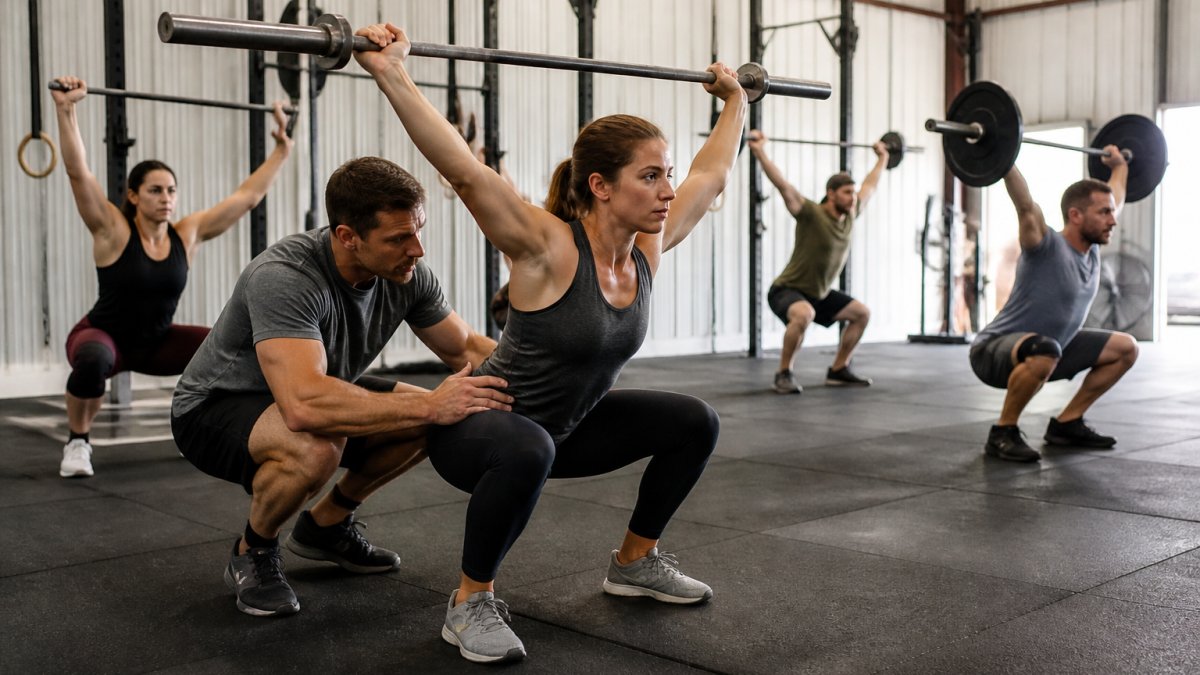
Group classes personalized coaching solves a problem neither modality handles alone. A personal trainer offers accountability and customization, but at premium rates with minimal social pressure.
At Warrior Welke CrossFit l/Hyrox, our coaches know who has a shoulder issue, who's training for HYROX, and who needs modifications. That knowledge, plus classmates who notice when you're absent, creates accountability apps can't replicate.
Small Group Personal Training vs. Large Classes: What Actually Works
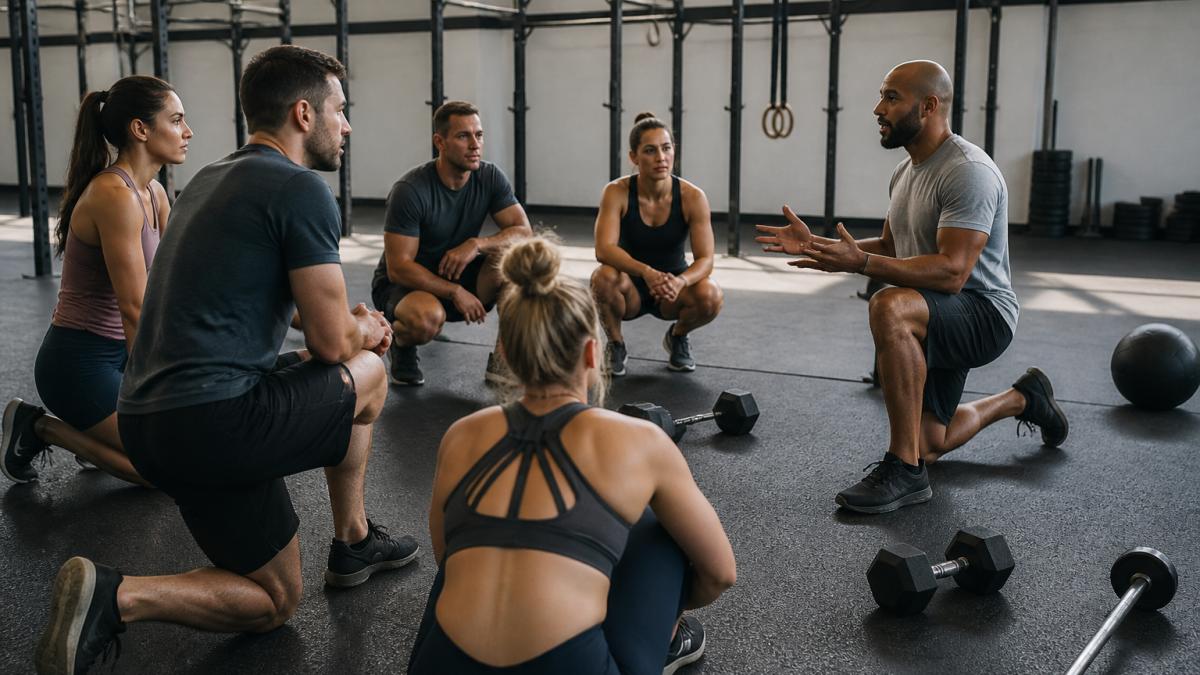
Small group personal training typically means 4-6 people with one dedicated coach; large classes run 15-30 with one or two instructors.
Small group personal training delivers higher individual attention: the coach watches each person's form, adjusts weights or rep schemes on the fly, and modifies movements for individual limitations.
Large classes create powerful social accountability and infectious energy, but the coach can't track ten different modifications, and it's easy to hide in the crowd on an uncommitted day.
Group Training vs Personal Training: Finding Your Accountability Style
The choice between group training and personal training isn't about which is objectively better, it's about which accountability mechanism works for you.
When One-to-One Coaching Wins
Personal training delivers the highest individual customization: every workout is designed around your goals, limitations, and preferences, with immediate feedback on every rep. There's nowhere to hide, if your form breaks down, the coach knows instantly.
One-to-one coaching suits people who respond to direct authority and personal relationships. For a specific outcome, injury rehab, competition prep, or breaking a plateau, personalized programming is hard to beat. The tradeoffs: cost, scheduling inflexibility, and reliance on one coach's expertise and personality.
When Group Accountability Delivers Better Results
Group classes with personalized coaching win when you need social pressure to show up.
Group training also suits people who thrive on community and variety. Exposure to different people, energy levels, and approaches to the same movements keeps training fresh and prevents the staleness of the same coach, routine, and gym day after day.
For most people, group classes with real personalization hit the accountability sweet spot: enough individual attention for the coach to catch form issues and scale appropriately, plus enough community to show up consistently.
What to Look for in a Class That Actually Scales for Your Fitness Level
Not all group classes deliver on the personalization promise. Some coaches run the same workout for everyone and expect you to modify on your own. That's not personalized coaching, that's a group class with an optional difficulty level.
Coach Qualifications and Scaling Expertise
First, assess whether the coach actually knows how to scale. Scaling isn't just "do fewer reps" or "use a lighter weight", it means understanding movement patterns, knowing which muscles are working, and recognizing when a compensation pattern is about to cause injury.
Ask about certifications. But credentials alone don't guarantee active scaling. Watch a class and count how often the coach corrects form or suggests a modification; if they're mostly demonstrating and glancing at the group, that's not active scaling.
Class Size and Individual Attention
Class size directly determines individual attention: a class of 20 can't get the same feedback as a class of 8. Large classes aren't bad, they're different.
If you need high individual attention, look for classes capped at 10-12. If you're experienced and just want group energy, larger classes work fine, but be honest about your needs. Returning after time off or managing an injury, a larger class leaves you guessing whether you're doing things right.
Assessment and Ongoing Feedback
Before you join, a good program should assess your fitness level, movement patterns, and limitations, that assessment informs how the coach scales for you. Without it, the coach is guessing.
Also ask how feedback works: regular progress check-ins? Can you ask questions about modifications? Can you track whether you're getting stronger or just going through the motions? The best group classes personalized coaching programs track actual fitness metrics, not just attendance.
Best Fitness App for Accountability: Digital Tools That Complement Group Classes
Apps can't replace in-person coaching, but they're excellent supplements (Optimizing Resistance Training Outcomes). The best fitness apps for accountability pair with group training by tracking workouts, showing progress, and creating digital accountability between sessions.
Warrior Welke: In-Person Coaching With Community Accountability
Warrior Welke CrossFit l/Hyrox combines in-person group classes with scalable programming for all fitness levels. Its strength is the high-touch coaching environment where every member gets modifications for their specific needs, whether managing an old shoulder injury or training for HYROX performance.
What sets Warrior Welke apart is the comprehensive approach: expert-led workouts, personalized coaching during classes, and nutrition and recovery services under one roof.
Best for: Local athletes in Raymond who want the full accountability package: in-person coaching, group community, and integrated nutrition/recovery support.
Pros:
- High-touch, supportive coaching that actively scales for individual fitness levels
- Comprehensive fitness and recovery services in one location
- Welcoming community environment that drives real accountability
- Convenient location with flexible drop-in options
Cons:
- Requires in-person attendance; less flexible for travel or schedule changes
- Membership cost includes services you may not initially need
Trainwell: Dedicated Human Coach in Your Pocket
Trainwell pairs you with a dedicated human coach who designs personalized workouts and adjusts them based on your progress. The app handles workout logging, form video feedback, and direct messaging, essentially personal training through an app.
The accountability mechanism is the coach relationship: you report to someone who knows your goals and limitations. The app adds convenience, train anywhere, anytime, but you're still accountable to a specific person. (Source: the benefits of personalized fitness plans)
Best for: People who want personalized programming but need flexibility in when and where they train.
Pros:
- Real human coach, not an algorithm
- Highly adaptive programming based on your feedback
- Convenient app-based training anywhere
Cons:
- No group community or peer accountability
- Lacks the social motivation of in-person classes
Future: Elite Coaching With Wearable Integration
Future connects you with elite trainers who build custom routines and integrate with Apple Watch for real-time tracking. Daily check-ins keep you accountable, and wearable integration means the coach sees your actual activity and recovery data, not just what you report.
This is premium personal training delivered digitally. The accountability is one-on-one and data-driven. You're paying for expertise and convenience, not community.
Best for: Busy professionals who want elite coaching without scheduling gym time.
Pros:
- High level of coach expertise
- Wearable integration provides objective performance data
- Structured coach-led routine
Cons:
- Premium pricing
- No group community or peer support
Caliber: Data-Driven Strength and Habit Accountability
Caliber specializes in strength training with heavy emphasis on data tracking and habit coaching, including science-based programming, nutrition guidance, and progress dashboards. You can do group coaching through the platform or work one-on-one.
The accountability is data-driven: tracking metrics, visualizing progress, and working toward specific strength targets, with habit coaching keeping you consistent between workouts.
Best for: Data-focused athletes who want measurable strength progress and habit accountability.
Pros:
- Strong educational content on strength training
- Free tier available for basic tracking
- Group coaching options available
- Emphasis on sustainable habit change
Cons:
- Can feel overly technical for beginners
- Data-driven approach may not suit people who prefer simpler feedback
Kickoff: Budget-Friendly Personalized Coaching
Kickoff delivers personalized workout and nutrition plans with weekly check-ins from a certified trainer at an accessible price point, focused on sustainable habit building rather than just workout completion.
Accountability comes through regular trainer contact and goal-oriented habit tracking, with weekly check-ins and progress reports creating consistent touchpoints.
Best for: Budget-conscious people who want personalized coaching without premium pricing.
Pros:
- Very accessible pricing
- Focus on sustainable habit building
- Direct trainer contact
Cons:
- Limited advanced features compared to higher-tier services
- Less emphasis on form coaching or video feedback
Critical Questions to Ask Before Joining a Group Class Program
Before committing to any group fitness program, ask these questions, the answers reveal whether it delivers personalized coaching or just runs the same workout for everyone.
About the coach:
- What certifications do they hold? (CrossFit Level 2, NASM, ISSA, etc.)
- How long have they been coaching? How much experience with scaling and modifications?
- Can you watch a class before joining to see how they actually coach?
About the class structure:
- What's the typical class size? Is it capped?
- How does the coach assess your fitness level before you start?
- How often do you get individual feedback on your form or progress?
- Are modifications offered, or are you expected to figure them out yourself?
About accountability and flexibility:
- How flexible are class times? Can you drop in, or is it membership-based?
- How does the program track progress beyond attendance?
- What happens if you miss classes? Is there a penalty or concern?
- Can you train remotely if needed, or is in-person mandatory?
About your specific situation:
- If you have an injury or limitation, can the coach design around it?
- Are there different class levels, or does everyone do the same workout?
- What does it include?
- Is there a trial period or intro offer?
Making Your Decision: Which Accountability Approach Fits Your Goals
The best accountability system is the one you'll actually use, match the modality to your personality and lifestyle.
If you're naturally social and thrive on group energy, group classes with personalized coaching typically deliver the highest adherence: peer accountability and community create consistency no app can replicate.
For the best of both, combine in-person group classes with a complementary app: group classes for community and social accountability, the app for progress tracking or supplemental coaching between sessions.
The critical factor isn't the modality, it's whether the program delivers what it promises.
Getting accountability right is the difference between a fitness routine you stick with for months and one you abandon after three weeks. If you're looking for genuine personalized coaching within a supportive group environment, try a free intro session and see how real scaling and community accountability actually feel.
Frequently Asked Questions
How do group fitness classes provide personalized coaching if everyone is doing the same workout?
The best group classes scale every movement to your fitness level. A coach watches your form and suggests modifications specific to your needs, injuries, or experience, so you're doing the same workout structure as everyone else, but the intensity and variation match your capability. This combines the motivation of a group with the personalization of coaching. Check whether the class size is small enough (typically under 12) for the coach to give individual attention.
What should I look for in a group class to ensure I'm actually getting personalized coaching?
Look for: a coach with current fitness certifications, a class cap of 12 or fewer members, a fitness assessment before your first session, and coaches who actively scale movements and give individual feedback. Ask whether the coach checks in on your goals and adjusts your program over time. Red flags include classes larger than 15, coaches who don't correct form, or no modification options offered.
Can I use a fitness app alongside group classes for better accountability?
Yes. Apps like Caliber, Trainwell, and Future work well with in-person group training. They track your workouts, provide check-ins between classes, and give you a record of progress. Some gyms and coaching services use their own app (like Trainerize) to log workouts and communicate with members. The combination of in-person coaching plus digital tracking often produces the strongest accountability because you get real-time feedback plus measurable progress metrics.