 how-to
What to Expect in Your First CrossFit Class
Table of Contents
- What Happens in the First 15 Minutes of a CrossFit Class
- CrossFit Class Structure: From Warm-Up to Cooldown
- How Long Is a CrossFit Class and What Affects the Length
- CrossFit Terminology for Beginners: A Quick Guide
- What to Wear to CrossFit: Comfort and Function
- Scaling and Inclusivity: How CrossFit Works for Non-Athletes
- Evaluating Gym Culture and Coaching Qualifications
- Nutrition Timing for Your First Class
- Your First Month: What to Realistically Expect
- Frequently Asked Questions
Last Updated: September 30, 2026
What Happens in the First 15 Minutes of a CrossFit Class
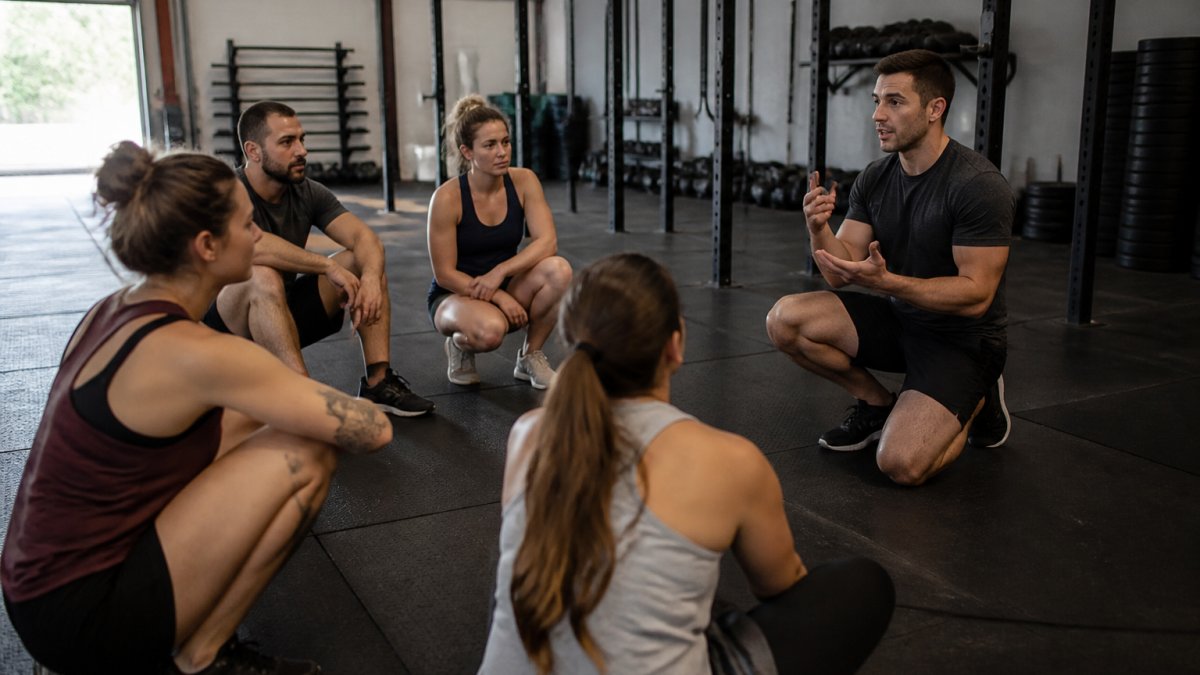
Walking into your first CrossFit class, the first 15 minutes of your first CrossFit class set the tone. A coach greets you, walks you through the space, and explains how the session will run. A clear start can calm nerves fast. (Source: CrossFit's official guide on what to expect)
Here's the typical flow:
- Minutes 1-3: Coach introduction and quick tour
- Minutes 4-8: Group briefing on the workout of the day
- Minutes 9-15: Guided warm-up and mobility work
CrossFit Class Structure: From Warm-Up to Cooldown
Most classes follow the same four-part rhythm. Each part builds on the last, so nothing feels random.
Warm-Up and Mobility
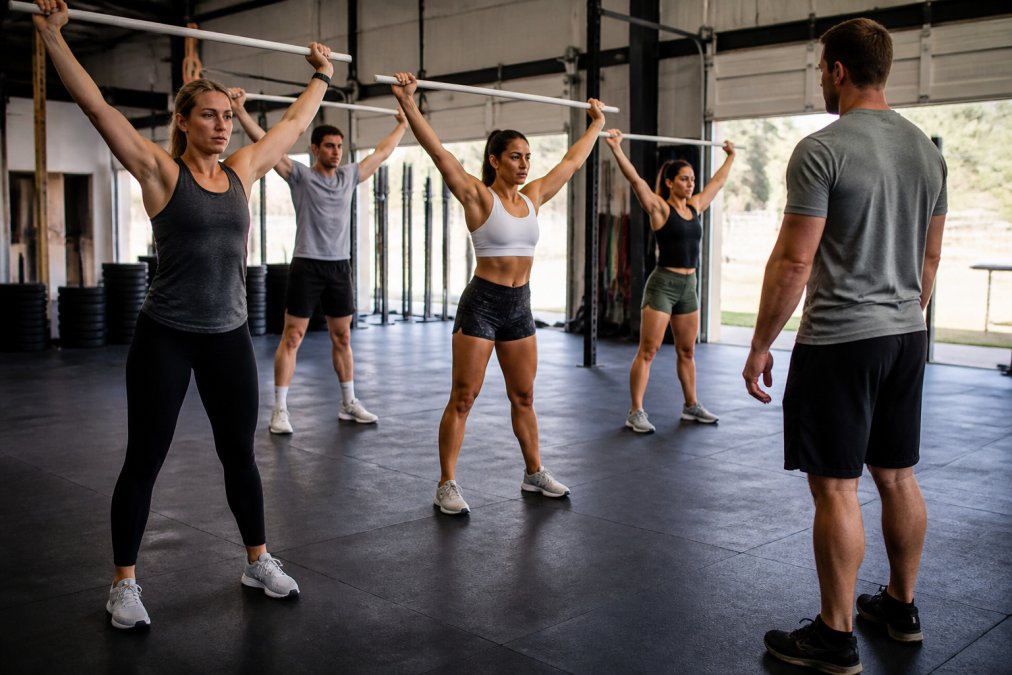
The warm-up raises your heart rate and loosens joints. Expect light cardio, dynamic stretches, and empty-bar or PVC pipe drills. This is not optional filler. Cold muscles and stiff shoulders are how people get hurt.
Skill and Strength Segment
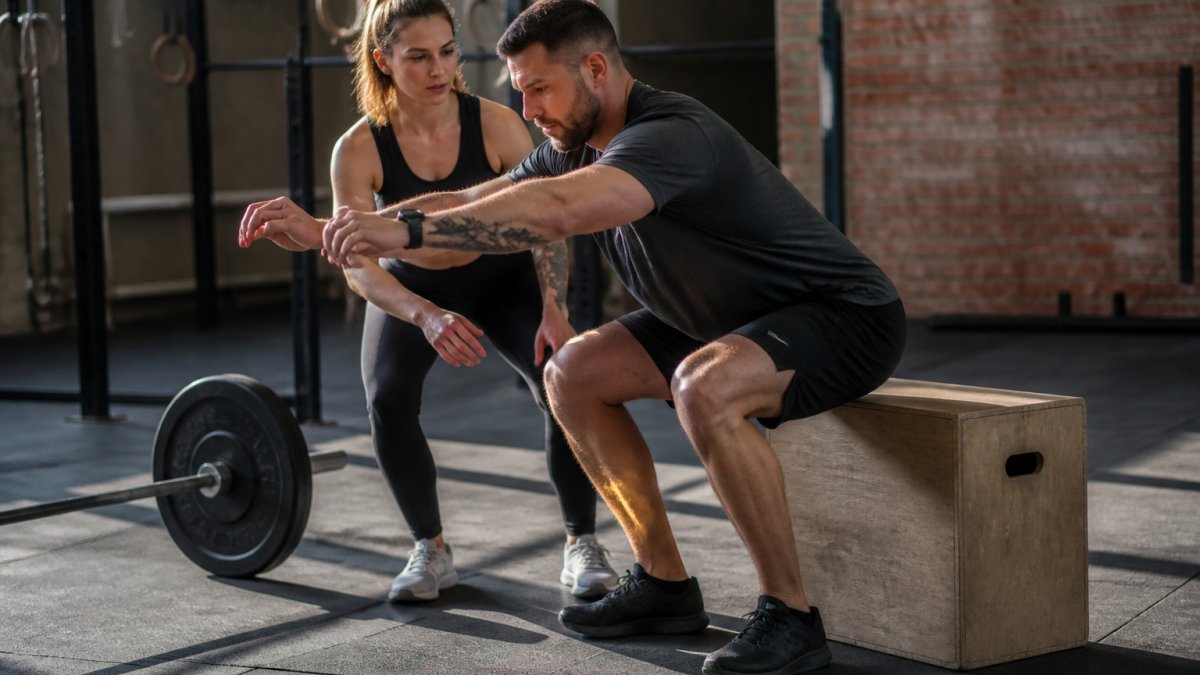
Next comes technique work. Coaches break down one or two movements, like a barbell squat or a kettlebell swing. You'll practice with light weight or no weight at all. Form comes before load, always.
Metcon (Workout of the Day)
The metcon is the main event, short for "metabolic conditioning." It's the WOD everyone talks about. It might be an AMRAP (as many rounds as possible) or an EMOM (every minute on the minute). It's intense, but every movement has a scaled version.
Cooldown and Recovery
Class ends with stretching and breathing work. Coaches often mention hydration and sleep here. Recovery is part of training, not a bonus.
How Long Is a CrossFit Class and What Affects the Length
Here's how a typical 60-minute class breaks down:
| Block | Time | What Happens |
|---|---|---|
| Welcome and briefing | 5 min | Coach outlines the WOD, scaling options, and any safety notes |
| Warm-up and mobility | 10-12 min | Light cardio, dynamic stretches, PVC or empty-bar drills |
| Skill or strength | 15-20 min | Technique work on one or two movements at light load |
| Metcon (the WOD) | 8-20 min | The high-intensity portion, scaled to your level |
| Cooldown and notes | 5-8 min | Stretching, breathing, and coach feedback |
What actually changes the length:
- Class format: A "foundations" or "on-ramp" session often runs 75-90 minutes because it front-loads instruction. A regular group class sticks closer to 60.
- Workout design: A short AMRAP of 8 minutes leaves room for a longer strength block. A 20-minute chipper (a long, multi-movement workout) eats most of the hour.
- Group size: A class of 20 needs more setup, demo, and equipment-shuffling time than a class of 8. Expect a 5-10 minute swing either way.
- Skill focus: Olympic lifting days (snatch, clean and jerk) take longer to teach safely than a bodyweight or rowing workout.
Many gyms offer a free or low-cost introductory session before you join regular classes. That session often covers movement basics, gym layout, and personal goals. Treat it as an orientation, not a workout you need to survive.
CrossFit Terminology for Beginners: A Quick Guide
The terms you'll hear in the first 15 minutes:
-
WOD (Workout of the Day): The main workout. The coach writes it on a whiteboard before class. Pronounced "wod" to rhyme with "rod."
-
Metcon (metabolic conditioning): The high-intensity portion of class. Sometimes the WOD and the metcon are the same thing; sometimes the metcon comes after a strength block.
-
AMRAP (as many rounds or reps as possible): A workout format where you complete as much work as you can in a set time. You'll hear "12-minute AMRAP" and know the clock is your limit.
-
EMOM (every minute on the minute): A pacing format where you start a set number of reps at the top of each minute, then rest for whatever time remains. It sounds intimidating; it's actually one of the easiest formats to scale.
-
For time: A workout where you race the clock to finish a fixed amount of work. The opposite of an AMRAP.
-
1RM (one-rep max): The most weight you can lift once with good form. Beginners rarely test a true 1RM; coaches use percentages of it instead.
-
PR (personal record): Your best result so far, whether that's a weight, a time, or a rep count. Hitting a PR is a big deal in the room.
-
Scaling: Adjusting a movement to match your current ability. More on this below.
-
Rx: "As prescribed", doing the workout exactly as written, with the standard weight and movements. The opposite of scaled. You are not expected to Rx your first class, and no one will ask.
The terms you'll hear after class:
- DOMS (delayed onset muscle soreness): The ache that shows up 24 to 48 hours after a hard workout. It's normal, it fades, and it's not a sign you did something wrong.
- Chalk: The white powder lifters use for grip. It's on the floor near the barbells. Use it freely.
- The whiteboard: Where the WOD, your score, and everyone else's score go. Writing your score is optional on day one. (Source: research on the benefits of functional fitness)
One practical tip: if a coach uses a term you don't know during the briefing, raise your hand before the warm-up starts. Asking in the moment takes 10 seconds. Pretending you understood and then guessing during the workout takes much longer to untangle.
What to Wear to CrossFit: Comfort and Function
Wear clothes you can squat, jump, and reach in. Think athletic shorts or leggings, a breathable shirt, and supportive training shoes.
What to skip:
- Loose jewelry that catches on bars
- Brand-new shoes you haven't broken in
- Cotton that holds sweat against your skin
Scaling and Inclusivity: How CrossFit Works for Non-Athletes
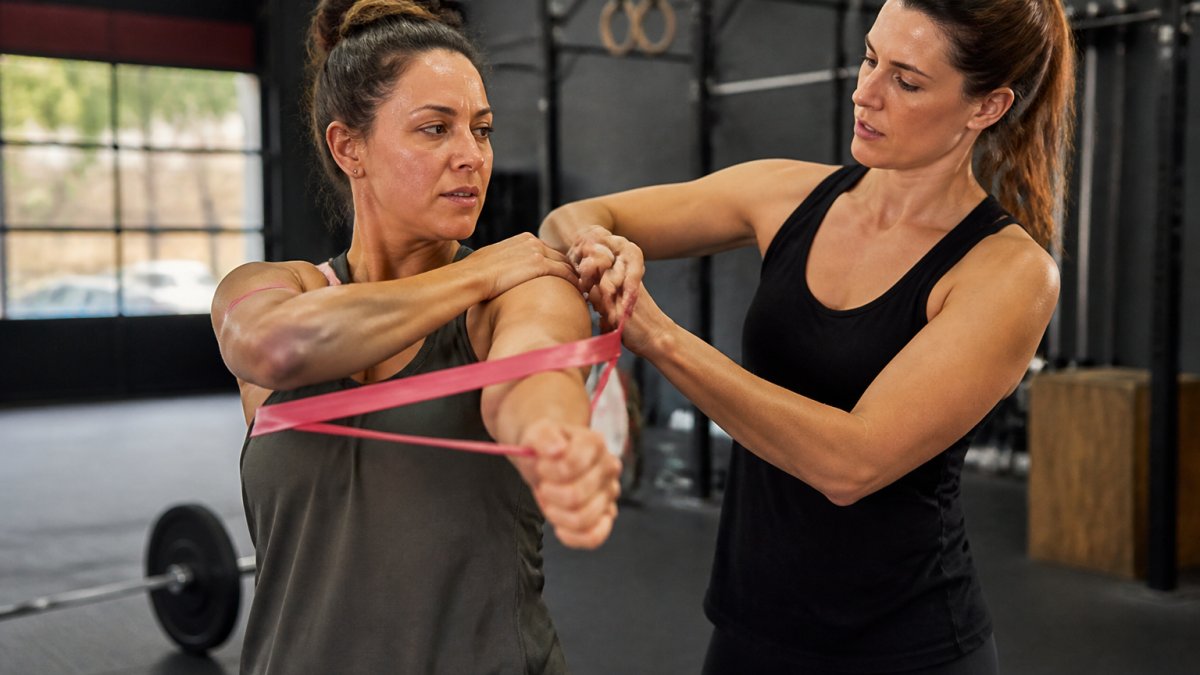
Every movement has a scaled version, and using it is normal, not a downgrade. Scaling is how CrossFit stays safe for beginners, older adults, and anyone with past injuries.
Common scale options:
- Banded pull-ups instead of strict ones
- Box step-ups instead of box jumps
- Lighter barbells or dumbbells
- Rowing instead of running
Evaluating Gym Culture and Coaching Qualifications
The culture of a gym matters as much as the equipment. Walk in and watch how members treat each other. Do coaches learn names? Do people cheer for the last finisher? That tells you more than any brochure.
Questions worth asking before you join:
- What certifications do your coaches hold?
- How do you handle a member's injury or limitation?
- What does a foundation or on-ramp program include?
- How do you teach technique before adding weight?
Nutrition Timing for Your First Class
Eat a light meal 90 minutes to 2 hours before class. Something with carbs and a little protein works well, like oatmeal with a banana or toast with eggs.
Avoid:
- Heavy, greasy meals right before training
- Training completely fasted if you're new
- Large amounts of caffeine if you're already nervous
Your First Month: What to Realistically Expect
Don't judge results by week one. The first few classes are about learning movements and building confidence.
What most beginners notice:
- Soreness for a few days after early sessions
- Better sleep and mood within a couple weeks
- Small strength gains by week three or four
- A growing sense of community
| Phase | What to Focus On | Typical Timeline |
|---|---|---|
| First class | Learning structure, meeting coaches | Day 1 |
| Weeks 1-2 | Technique and scaling | 2 weeks |
| Weeks 3-4 | Consistency and light load | 2 weeks |
| Month 2+ | Strength and endurance gains | Ongoing |
Frequently Asked Questions
What should I wear to my first CrossFit class?
Wear comfortable athletic clothing that allows full range of motion, such as shorts or leggings and a t-shirt. Avoid loose clothing that can get caught on equipment. Supportive athletic shoes with good cushioning are ideal for mixed workouts. Bring a water bottle and a towel. If you have long hair, tie it back. Remember, you'll be moving through functional movements, so prioritize comfort and breathability.
How long is a typical CrossFit class?
Most CrossFit classes run 60 minutes, including warm-up, skill work, the workout of the day, and cooldown. Some gyms offer 45-minute express classes or 90-minute sessions for specific training. At Warrior Welke CrossFit l/Hyrox, classes are designed to fit a one-hour format, but arrive 10-15 minutes early for your first class to get oriented and meet the coach.
Will I be sore after my first CrossFit workout?
It's common to experience delayed onset muscle soreness (DOMS) 24-48 hours after your first class, especially if you're new to functional movements. This soreness is a normal response to new stimuli. Stay hydrated, get adequate protein, and light movement like walking can help. The intensity is scaled to your level, so you won't be pushed beyond what's safe. Listen to your body and communicate with your coach.
Do I need to be fit before starting CrossFit?
No, you don't need to be fit to start. CrossFit is designed to be scalable for all levels, from beginners to advanced athletes. Coaches will modify workouts using lighter weights, simpler movements, or reduced reps. Many gyms offer foundation or on-ramp classes to teach you the basics before joining regular classes. The key is to start where you are and progress gradually.
Your first CrossFit class is a starting point, not a test. The right gym meets you where you are and builds from there. Warrior Welke CrossFit l/Hyrox offers supportive coaching, scalable programming for every fitness level, and nutrition and recovery support under one roof. Get started with Warrior Welke CrossFit l/Hyrox and take the first step toward lasting strength and endurance.